
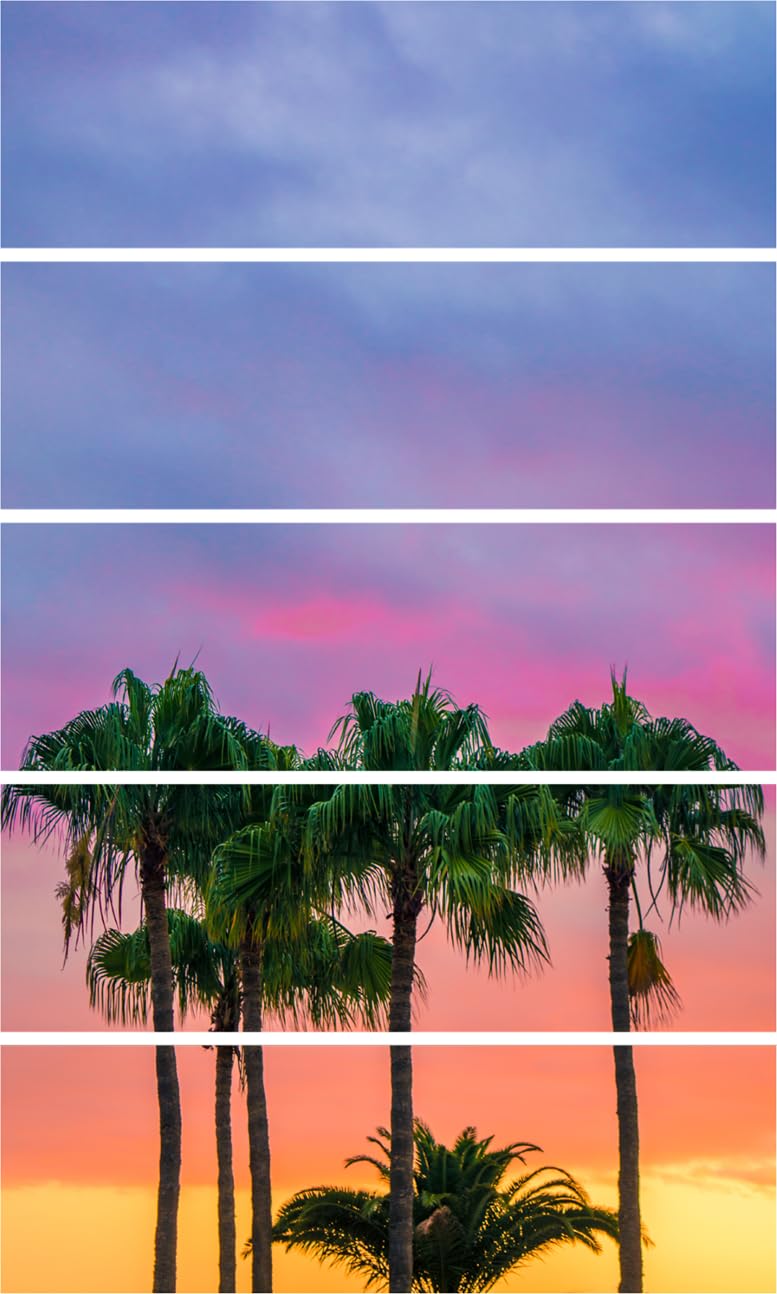
Tree-mendous Multi-Frame Wall Art Thatll Leaf You Speechless - Nature Framed Masterpiece (127x76cm)
You may also like

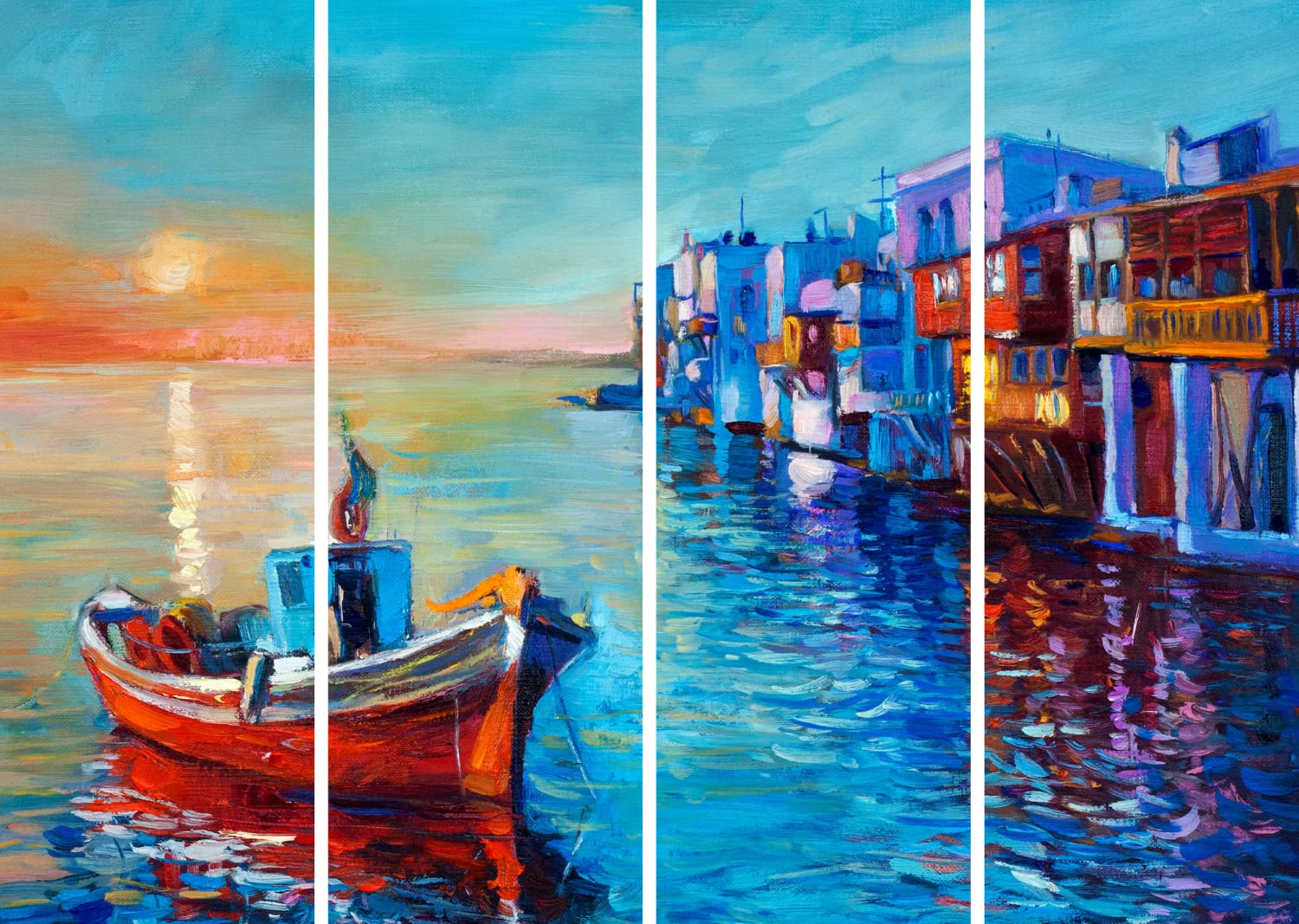
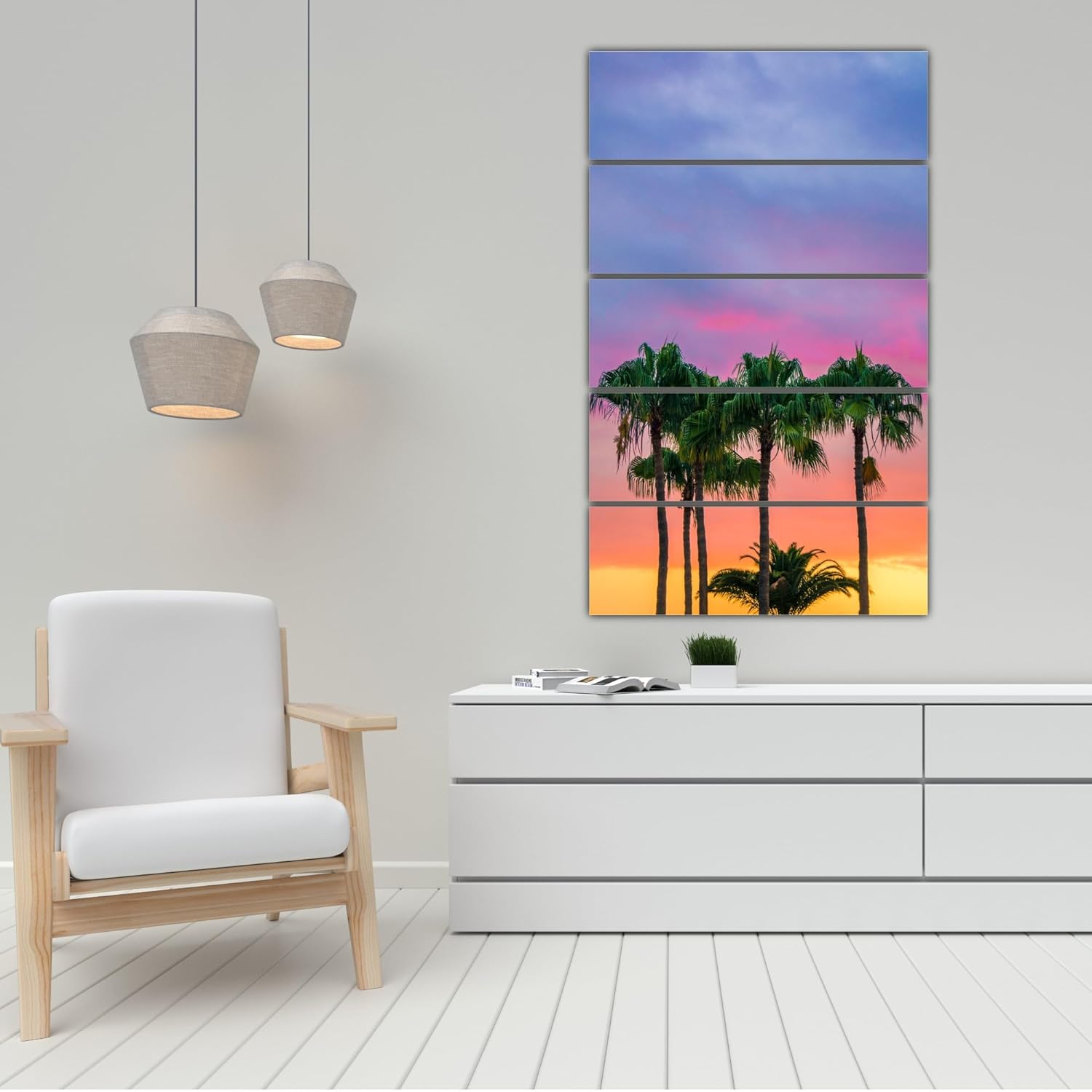
Tree-mendous 5-Panel Tropical Sunset Canvas Wall Art Painting (127x76cm) - Multi-Frame Nature Art
THE SPECIFIC FIT RECOGNITION
You might have browsed dozens of sunset paintings by now. Some were single-panel pieces—90cm felt lost on your 12-foot living room wall, like a postcard floating in empty space. Some were too wide—150cm would work, but only if you have a completely blank wall with no windows or side furniture nearby. You probably kept coming back to this format—127cm across five panels—because intuitively, the vertical gradient feels different. But you want to be sure.
Here's why this is the one: 127cm covers about one-third of a standard 12-foot (360cm) living room wall—leaving 115cm of breathing room on each side. This creates visual balance without crowding the room. Your wall probably has other elements—maybe a window 4 feet away, maybe side tables flanking your sofa, maybe a floor lamp in the corner. The 127cm width works with these elements instead of competing with them. And at 76cm tall, this fits comfortably under 8-10 foot ceilings. The five-panel layout does something clever: the vertical color gradient (sky blue flowing down through purples, pinks, corals, to golden yellows) makes your ceiling feel taller.
And the colors—these aren't the cool-toned tropical blues that look stark against cream walls. These are warm sunset tones. Blues with purple undertones, pinks with coral warmth, oranges that transition to soft yellows. Your living room walls are probably cream, off-white, or that light yellow shade many Indian apartments have. Your sofa is probably brown or beige fabric. This canvas will feel like it was chosen specifically for that combination—warm enough to complement your furniture, colorful enough to create a focal point without clashing.
DIMENSIONAL MATHEMATICS
Why 127cm Works on 12-Foot Living Room Walls (and What Happens If You Go Smaller or Bigger)
Your living room wall is probably 10 to 12 feet wide (300-360cm in most Indian 2BHK and 3BHK apartments). The ceiling is probably 8 to 10 feet high. Here's the visual math:
127cm canvas on a 12-foot (360cm) wall:
116cm of space on the left side
116cm of space on the right side
Coverage ratio: Canvas covers 35% of wall width
Effect: Anchored, intentional, balanced—not floating, not overwhelming
Now consider your furniture arrangement:
Your sofa is probably 6-8 feet (180-240cm) wide, sitting 6-12 inches from the wall
Hanging height: 20-25cm above sofa top puts canvas center at 140-160cm from floor (perfect eye level from 8 feet away)
Side elements: You probably have a side table (18-24 inches wide), floor lamp, or window within 3-4 feet of sofa edge
The 127cm width spans the sofa zone without crowding your side furniture
If you went with 90cm instead:
25% wall coverage—looks like an accent piece, not a focal point
On a 12 ft wall with an 8 ft sofa, you'll have 135cm of empty space on each side
Effect: Your eye constantly notices all that empty wall
Specific problem: You'll probably end up buying matching side pieces to fill the space
If you went with 150cm instead:
42% wall coverage—works if you have a completely blank wall
But if you have a window 4 feet from your sofa edge, or a side table and floor lamp, the 150cm width will feel tight
Effect: Makes the room feel fuller, but not necessarily better
Specific problem: You'll be constantly adjusting side furniture positions to make it work
The 127cm is the Goldilocks size: fills the wall without dominating it, works above standard sofas without crowding side furniture, leaves room for your floor lamp and side table to exist comfortably.
And at 76cm tall, this sits proportionally under 8-10 foot ceilings. From your sofa (8-10 feet away), you see the full composition—the gradient flow from sky blue at top to golden yellow at bottom. Walk up close, you see the canvas texture and palm frond details. Both viewing distances matter—and this size works for both.
The five-panel layout creates another benefit: instead of one 127cm rectangle, you get five 24cm panels with 2cm gaps. The vertical gradient across panels creates visual rhythm—your eye travels from cool blues at the top down through the warm sunset tones, making your ceiling feel higher than it actually is. This is especially useful if you have standard 8-foot ceilings that sometimes feel low.
COLOR & DESIGN PSYCHOLOGY
Why This Tropical Sunset Works in Indian Homes (When Most Tropical Art Doesn't)
Here's the problem with most tropical sunset art: it's either too cool-toned (pure blues and teals that look cold against cream walls) or too intense (neon pinks and electric oranges that clash with brown furniture). This one works because the color progression is warm-based.
The gradient flow:
Sky blues (top panel): Soft blues with slight purple undertones—not harsh Caribbean blues
Purple-pink transition (second panel): Where the sky starts warming up, like 6pm light
Coral pink to peach (third panel): The heart of the sunset, warm enough to complement cream walls
Orange to warm coral (fourth panel): Sunset deepening, rich but not overpowering
Golden yellow to soft orange (bottom panel): The horizon glow, warm and grounding
Against your actual walls: Your walls are probably cream, off-white, or light yellow. These warm sunset tones don't fight that—they enhance it. The blues at the top provide contrast without feeling cold. The pinks and corals in the middle create visual interest. The golden yellows at the bottom echo your wall color, making the whole piece feel integrated.
With your furniture: Brown or beige sofa? The warm oranges and golden yellows complement wood tones naturally. Gray sofa? The purple-pink panels provide that pop of color that makes gray feel intentional instead of neutral-by-default. Wooden coffee table, side tables? The palm trunks in dark brown echo that.
The palm trees themselves: They're silhouettes—dark green to black. They don't introduce new colors that need to match your decor. They create structure and composition without adding color complexity. And culturally, palm trees feel familiar in India—they're tropical, but not foreign. You see them in Goa, Kerala, coastal regions. They don't read as "imported Western beach aesthetic."
Lighting considerations:
Morning light (east-facing wall): The blues and purples at the top will look vibrant. The whole piece feels fresh, energizing.
Afternoon light (west-facing wall): The oranges and yellows intensify beautifully. The sunset theme becomes even more sunset-like.
Evening/LED light (warm white 3000K): All the warm tones—pinks, corals, oranges, yellows—look richer. This is when the piece really glows.
INSTALLATION REALITY
Hanging Five Panels Sounds Complicated. It's Not.
You're looking at this five-panel layout and thinking: "That's ten D-ring hooks I need to align perfectly. This is going to take hours and I'm going to mess it up."
Here's the actual reality: the hanging template included with your canvas makes this foolproof. It's a full-size paper template showing exactly where all ten mounting points go. You tape it to your wall at the exact height you want. You mark the ten points through the paper. You remove the template. You drill ten small 6mm holes. You're done with the hard part.
Time breakdown:
Taping template to wall and marking points: 5 minutes
Drilling ten 6mm holes: 8-10 minutes (you'll get faster after the first few)
Installing wall anchors and hooks: 5 minutes
Hanging the five panels on the hooks: 3 minutes
Total: 20-25 minutes from start to "step back and admire"
For drywall (common in modern apartments): Use the included plastic wall anchors. The 6mm holes are small enough that when you move out, you fill them with wall putty (₹50 at any hardware store), sand smooth, and touch up with a dab of paint. Your landlord will never notice. Total repair cost: ₹200 and 20 minutes of your time.
For concrete (common in older buildings): Use the included concrete anchors and a 6mm masonry bit. Same small holes, same easy repair when you move.
Weight distribution: At 3kg total across five panels, each panel weighs about 600g. The D-rings and anchors are rated for 2-3kg each. You have significant safety margin—these aren't going anywhere.
The alignment anxiety: The template solves this. All five panels will be level because the template is level. The spacing between panels will be consistent because the template shows you the exact spacing. You're not eyeballing anything.
Rental-friendly confirmation: 6mm holes are smaller than the holes left by curtain rod brackets, towel bars, or standard picture frames. This is not "wall modification" that costs deposits. This is normal decoration that's easily reversed.
THE COMPARISON
How This Compares to the Other Sunset Canvases You've Been Considering
You've probably looked at single-panel sunset paintings. And three-panel ocean sunsets. And maybe that 150cm beach sunset that keeps showing up in your recommendations. Here's how they're different:
Single-panel 90cm sunset canvas:
Wall coverage: 25% of 12 ft wall
Visual effect: Looks like an accent piece, not a statement
Height illusion: None—it's just a rectangle
Your room: Will feel like something's missing, like you need to add more wall decor
Price: ₹2,196 (₹300 less, but you'll want to buy more pieces)
3-panel 120cm ocean sunset:
Wall coverage: 33% of 12 ft wall (similar to this)
Visual effect: Horizontal flow, makes wall feel wider
Height illusion: None—horizontal panels don't affect ceiling perception
Color palette: Usually cool blues and teals (harder to match with cream walls and brown furniture)
Price: ₹2,996 (₹500 more)
This 5-panel 127cm tropical sunset:
Wall coverage: 35% of 12 ft wall
Visual effect: Vertical gradient creates upward flow
Height illusion: Makes 8 ft ceilings feel taller
Color palette: Warm blues through golden yellows (complements Indian home colors)
Price: ₹2,496
Unique benefit: The vertical panel layout lets you experience the gradient progression—sky to horizon—which single panels can't do
Single-panel 150cm beach sunset:
Wall coverage: 42% of 12 ft wall
Visual effect: Big statement, but requires completely blank wall
Room constraints: Doesn't work if you have side tables, floor lamp, or window nearby
Installation: Single heavy piece (easier to hang, but harder to fit in tight spaces)
Price: ₹3,996 (₹1,500 more)
The differentiator: This five-panel format isn't about being bigger or cheaper—it's about creating vertical movement. Most sunset art flows horizontally (ocean horizon, beach scenes). This flows vertically (sky to ground), which changes how your eye moves through the room and makes ceilings feel less compressed.
REALISTIC EXPECTATIONS
What This Will Actually Look Like on Your Wall (Not in Perfect Product Photos)
Product photos are shot in perfect lighting against white walls. Your home isn't that. So here's what this tropical sunset canvas will actually look like in your actual living room:
In morning light (east-facing window): The blues and purples in the top panels will look crisp and saturated. The whole piece feels fresh and bright. If you're someone who has coffee in your living room while morning sun streams in, this is when the canvas looks most energizing. The palm silhouettes stand out sharply against the gradient.
In afternoon light (west-facing window): The oranges and yellows in the bottom panels intensify. The sunset theme becomes more sunset-like. The colors warm up significantly—the pinks look more coral, the yellows look more golden. This is when the piece matches its theme most literally. If your wall gets 2-4 hours of direct afternoon sun, the UV-resistant inks mean these colors will still look this good two years from now.
In evening/artificial LED light (warm white 3000K, standard in Indian homes): All the warm tones—pinks, corals, oranges, yellows—look richer and slightly deeper. The blues at top read as purple-blues instead of sky-blues. The overall piece feels cozy and atmospheric. This is when guests see your living room, and this is when the canvas creates that "intentionally decorated" impression.
Against cream walls (most common): The warm color palette blends naturally. The piece doesn't jump off the wall—it integrates. The golden yellows at the bottom near-match your wall color, creating a seamless transition. The blues at top provide just enough contrast to create a focal point.
Against off-white walls: Similar to cream, but the cooler wall tone makes the blues and purples pop slightly more. The oranges and pinks provide warmth that balances the cool wall.
Against light yellow walls (common in older apartments): The golden yellows in the bottom panels echo your wall color. The blues and purples at top create a complementary contrast (yellow and purple are opposite on color wheel). The whole piece feels very cohesive.
With brown fabric sofa: The oranges and warm corals in the middle panels pick up the brown tones. The palm trunks echo the furniture. The overall effect is earthy and grounded.
With beige/tan sofa: The soft pinks and peach tones complement beige beautifully. The golden yellows match. The blues provide contrast without clashing.
With gray sofa: The purple-pink panels are what make this work. Gray + purple/pink is a classic pairing. The warm yellows and oranges prevent the room from feeling too cool-toned.
CLIMATE DURABILITY
Will This Survive Mumbai's Monsoons? Bangalore's Temperature Swings? Chennai's Humidity?
You're buying canvas art that will hang on your wall through:
70-85% humidity during monsoons (if you're in Mumbai, Kolkata, Chennai)
15-degree temperature swings between day and night (Bangalore, Pune)
45°C summer heat followed by sudden rain (Delhi, Hyderabad)
Coastal salt air (Mumbai, Chennai, Goa)
Cheap canvas paintings fail specifically because of these conditions. The canvas absorbs moisture during monsoons and expands. When it dries, it contracts. After two monsoon cycles, you see permanent rippling. The wooden frame warps if it wasn't properly treated.
This canvas handles it:
Moisture-resistant polymer coating: Water vapor can't penetrate the canvas fibers. During monsoons, condensation beads up and evaporates instead of soaking in. The splash-proof coating (which is why this can go on covered balconies) provides an extra layer of protection.
Kiln-dried pinewood frame: The wood is dried to 12% moisture content before construction—below the 14-18% equilibrium moisture for most Indian climates. Translation: the frame won't absorb atmospheric moisture and expand. Your frame stays dimensionally stable through multiple monsoon seasons.
UV-resistant eco-solvent inks: Direct afternoon sun won't fade the sunset colors. If your living room wall faces west and gets 3-4 hours of direct sunlight daily, the blues will stay blue, the pinks will stay pink, the yellows will stay vibrant. Five years from now, this will look the same.
Sealed edges: The canvas wraps around the frame edges, and those edges are sealed. Dust can't accumulate in the gap between canvas and frame. Moisture can't enter from behind.
THE BALCONY ADVANTAGE
Why "Splash-Proof" Matters If You Have a Covered Balcony
Most canvas paintings explicitly say "indoor use only." This one says "splash-proof." That's not marketing—that's a functional coating that lets you hang this on a covered balcony without worrying about:
Monsoon rain splash (the wind-driven spray that comes even under a balcony roof)
Morning dew condensation (common in coastal cities)
Accidental water exposure (someone watering plants nearby, cleaning the balcony)
Covered balcony = perfect spot for tropical sunset art. You're looking at palm trees and sunset colors in a space that actually gets outdoor light and fresh air. The warm gradient works beautifully in morning balcony coffee situations.
Not waterproof = not for exposed rain. Splash-proof means it handles occasional moisture exposure. It doesn't mean you can hang this in direct rain. If your balcony has a solid roof and side protection, this works. If rain comes in sideways during storms, stick to indoor walls.
The splash-proof coating also means easier cleaning. Dust wipes off with a dry cloth without streaking. Kitchen grease (if you hang this near an open kitchen) wipes clean with a barely damp cloth. Standard canvas? You're stuck with whatever settles into the weave.
WHO THIS IS FOR (AND WHO IT'S NOT For)
This canvas is for you if:
You have 10-12 ft living room walls that feel empty
Your walls are cream, off-white, or light yellow
Your furniture is brown, beige, or gray
You want color without clashing with existing decor
You like the idea of tropical/nature themes but want warm tones, not cool blues
You have standard 8-10 ft ceilings and want them to feel taller
You appreciate sunset colors but don't want literal beach scenes
You're in a rental and need easy installation that won't cost your deposit
This canvas might not be for you if:
Your walls are dark colors (charcoal, navy, forest green)—the warm gradient won't show well
You have very modern/minimalist black-and-white decor—this introduces too much color
You want pure cool-toned blues and teals—this sunset leans warm
You need something for a narrow wall under 10 ft wide—127cm will feel cramped
You prefer realistic photography over illustrated/artistic sunset scenes
You want traditional spiritual art (Krishna, Ganesha, Buddha)—this is nature/landscape theme
QUICK SPECS & PURCHASE DETAILS
Moolwan Tree-mendous 5-Panel Tropical Sunset Canvas Wall Art Painting
Size: 127cm (W) x 76cm (H) x 0.6cm (D)
Weight: 3kg total (600g per panel)
Panel count: 5 panels with vertical gradient layout
Canvas: 340 GSM cotton with moisture-resistant + splash-proof coating
Frame: 1.5" kiln-dried pinewood (12% moisture content)
Inks: Eco-solvent UV-resistant (no fading in direct sun)
Installation: Includes concrete anchors, drywall anchors, D-rings, hanging template
Best for: 10-12 ft walls, 8-10 ft ceilings, cream/off-white walls, brown/beige/gray furniture
Special feature: Splash-proof coating for covered balcony use
Price: ₹2,496
Shipping: 5-6 days to metro cities, includes tracking
COD: Available
Warranty: Full replacement for manufacturing defects and shipping damage (requires unboxing video)
FINAL SECTION: THE DECISION
You've been searching for weeks. You've compared sizes, read reviews, calculated wall coverage percentages. You know what you need.
This 127cm five-panel tropical sunset works on your 12-foot wall. The warm gradient complements cream walls and brown furniture. The vertical layout makes 8-foot ceilings feel taller. The splash-proof coating means you can even use it on your covered balcony. The installation takes 25 minutes with the included template and hardware. The climate-tested materials will survive Mumbai's monsoons and Delhi's heat.
Your wall has been empty long enough.
The canvas is ₹2,496. Shipping takes 5 days. Installation takes 25 minutes. And then your living room will finally feel complete—like someone with good taste actually lives there.
The decision isn't whether to buy wall art. It's whether you're ready to stop researching and start living with a room that feels intentional.